
M.J. Bale | Lake Hawea Station
Share
Share
Copy
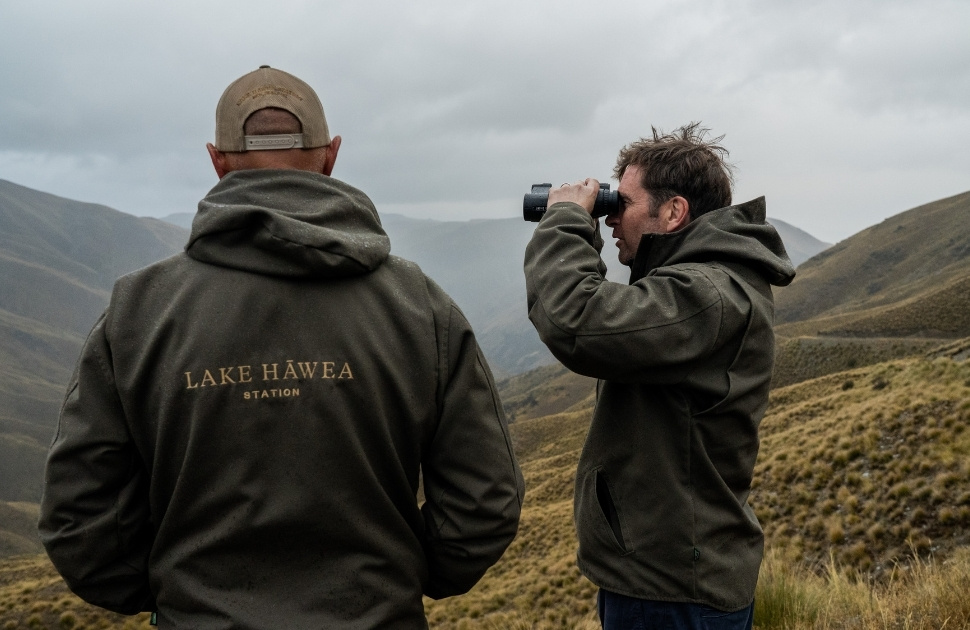
In our experience, the world’s best wool doesn’t come from soft, green paddocks. It comes from the wildest, most rugged places on the planet. In Australia, that means places like Tasmania’s Kingston Farm, where Simon Cameron’s award-winning clip comes from nomadic Merino sheep grazing “rough country” — the scrubby, pre-colonial grasslands below Ben Lomond Mountain. The explorer gene is hard-wired into the biology of the Merino. With its DNA tracing back to the Middle East, then North Africa and the mountains of Spain, the sheep’s instincts are to keep moving, seeking out a diversity of feed in the least forgiving terrain. In New Zealand, we’d argue the best wool comes from the high-altitude backcountry of Otago’s Southern Alps — farms like Lake Hāwea Station. Here, beyond steep, jagged basalt ridgelines at elevations of more than 1,500 metres, hardy Merinos traverse thousands of acres to graze tussock grass, snowberries, and lichen, turning it, slowly, into something extraordinary. But what connects Kingston and Lake Hāwea Station isn’t just the wildness of their country. It’s what their owners have chosen to do with it. Both farms operate on the understanding that the land, the animals, and the long-term viability of the enterprise are a single system.
Kingston is a farm of significant biological value to Australia — home to over a dozen threatened species and approximately 8% of all Tasmania’s pre-colonial indigenous grasslands. Simon Cameron manages his sheep in harmony with these grasslands, offering them what he calls the “four freedoms”: freedom from fear, hunger, distress, and discomfort. His sheep are integral to the management of those grasslands; the grasslands are what make his wool special. If Kingston is our Australian blueprint, Lake Hāwea Station is its New Zealand equivalent. Owned by Geoff and Justine Ross since 2018, the 6,500-hectare station has become the world’s first B Corp–certified sheep farm and Australasia’s first certified carbon-zero operation. Thanks to native scrub re-emerging from years of low-intensity grazing, along with the planting of diverse, multi-species pastures, the station currently sequesters 2.5 times more carbon than it emits. Thirty thousand newly planted native trees line seven kilometres of lakefront. And in the station’s rocky outcrops lives something found nowhere else on earth: the last wild population of Western Grand skinks, a critically endangered lizard once believed locally extinct. “Productivity and profitability,” says Geoff Ross, "can work hand in hand with biodiversity and environmental improvement.”
Lake Hāwea Station, we’re chuffed to announce, is the source of our newest farm partnership. The collaboration takes the form of six elegant suits (five flannel, one twill) and four wool shirts — every one of them woven by Reda in Piedmont from a 17.2-micron (average) clip. Alongside the suits and shirts is our new Alpine-Active collection of pro skiwear, including a 100% Merino ski jacket and ski pants, again using LHS wool and Reda fabric. The skiwear is made in collaboration with JAAM Italia. It’s a supply chain that runs from New Zealand’s Southern Alps to the Italian Alps, with an obsession over natural fibre at every stage. The welfare story behind Lake Hāwea Station wool is also worth sharing. In conventional shearing, the incentive structure is built around speed — shearers are paid by the count, which means the sheep’s experience is largely irrelevant to the economics.
At LHS, the boards are painted white, mattresses are laid at the end of the chutes, and shearers are given a fair daily target. They’re then bonused not on beating that number, but on how gently they handle the animals. Farm manager Jack and head shepherd Angus score each session, and cortisol studies with Lincoln University are currently in progress to quantify differences in stress levels. It’s the same logic that runs the whole farm: every decision made in service of the animal and the land tends, over time, to produce the best result for everyone. And like our store-to-farm, single-source wool partnership with Kingston Farm in Tasmania, a percentage of every M.J. Bale × LHS garment sale will return directly to Lake Hāwea Station for biodiversity preservation. This “rebate” is not offsetting, nor a donation program dressed up as commerce. It’s a mechanism for making the sale of a garment inseparable from the protection of critically endangered habitat. And much like fabric made from this precious natural fibre itself, it’s a thread that connects the person wearing the suit, shirt, or ski gear to the land that grew it. Wild concept, huh?
Share
Share
Copy
- 287 Lonsdale Street, Melbourne VIC 3000
- Call us (03) 8609 8221
- Get directions via Google
